
Meet Josh. He'll probably pick up your books himself.
Josh Eldred runs SellBooksABQ from a warehouse in Albuquerque's North Valley. He's full-time in the book business — buying rare material, running collections, handling estates, and making sure nothing hits the landfill.
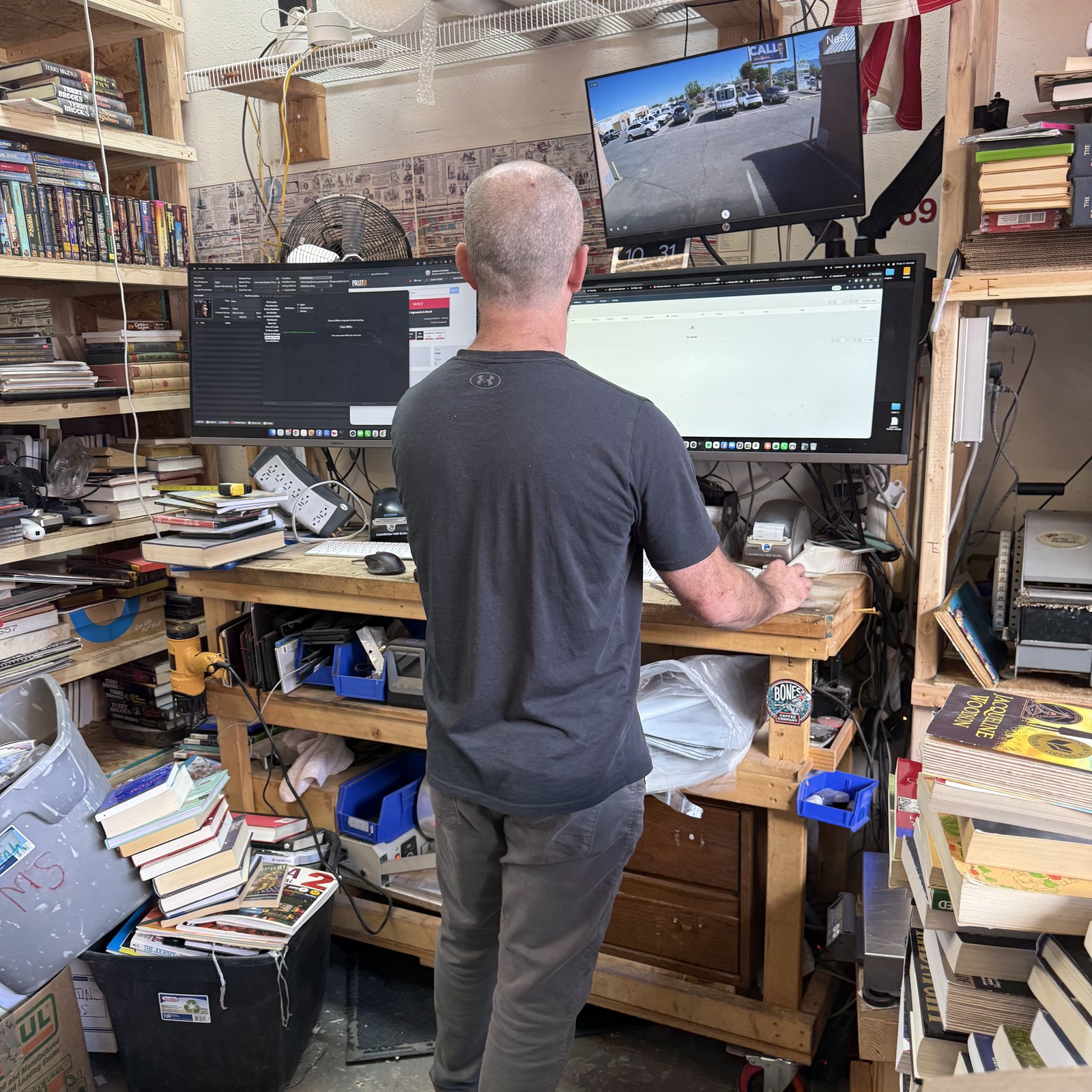
Why Josh does what he does.
Josh has been a full-time book dealer for years — buying, selling, and managing collections through Amazon, eBay, and direct channels. He learned early that most people who call with books were never going to get a fair price. They were about to donate to Goodwill or trash them. Nobody in Albuquerque was offering to come to your house and pay cash on the spot.
That gap is why SellBooksABQ exists. Josh saw an opportunity to cut out the middleman: instead of people taking books to thrift stores, he comes to them and pays them directly. Same books he'd buy anyway. Same warehouse. Same outcome for what doesn't sell — kids' books go to NMLP and out to readers; the overprinted adult stuff I recycle myself.
The no-landfill part isn't abstract. Tuesdays, Josh volunteers with Recycling Services at La Vida Llena, a North Valley retirement community — picking up the books and paper residents leave behind, and helping load the APS Title I McKinney-Vento van with the furniture, clothes, and household goods that go to Albuquerque families experiencing homelessness. Books come back to the shop on SBA's pipeline; the rest goes where it's needed. That weekly rotation is where the habit of finding a real home for every category of stuff comes from.
His own words: "I buy the books from these thrift stores every week. Might as well pay the customer instead."
I am legitimately the only option for many people. I am providing value by coming to get this stuff.
What Josh is actually trained to spot.
SellBooksABQ is not a bulk buyer of paperbacks. Josh is fully credentialed in rare, collectible, antiquarian, first-edition, and signed books. This is a core capability — not a side skill.
-
First Editions & Signed Copies
Hardcover firsts, limited editions, signed copies, dust jackets in good condition, fine bindings — Josh identifies edition points and pricing from real market data.
-
Antiquarian & Rare Material
Antique leather bindings, matched sets, early printings, condition assessment, and authenticity — the kind of work that requires handling thousands of examples.
-
Regional New Mexico Authors
Hillerman, Anaya, Silko, Momaday, McCarthy regional titles, and local history — material people often undervalue that has genuine collectible appeal.
-
Provenance & Condition
Inscriptions vs. signatures, condition grading, water damage assessment, binding integrity — the details that make the difference between $5 and $500.
What happens to the books he doesn't buy.
Thrift stores are drowning in donations. A huge percentage of what lands at Goodwill or Savers gets trashed within a week — especially books. Shelf space is limited, volunteers can't keep up, and most stuff gets sent to the dumpster.
Josh also runs the New Mexico Literacy Project out of the same Edith Blvd shop. Children's books go straight there — and then out to places where kids will actually read them. 25 boxes go to La Vida Llena staff every Christmas so they can pick free books for their own kids. Others restock the Little Free Library at Sunflower Meadow Park out in the east mountains, which runs low fast in the summer when school's out. Ongoing drops also go to a rural lending library run by a retiree's family and to a church library serving an underserved community. It is not a registered non-profit and it's not a charity. It's just the literacy side of what he does: get books to readers instead of landfills.
Some books can't be sold and can't be read — moldy, water-damaged, missing covers, bindings shot. Overprinted adult titles with no resale value (think common unabridged dictionaries, decades-old book-of-the-month reprints) get the same treatment. Those all get properly recycled as paper. Josh runs each one through an industrial hydraulic cutter to separate the binding from the text block, loads the paper into a gaylord, forklifts it into the van, and drives it to a paper recycler himself — several times a week. It's the full loop: nothing rare ends up in a thrift pile, nothing readable ends up in a landfill, and nothing ruined ends up in the trash.
Stats and impact →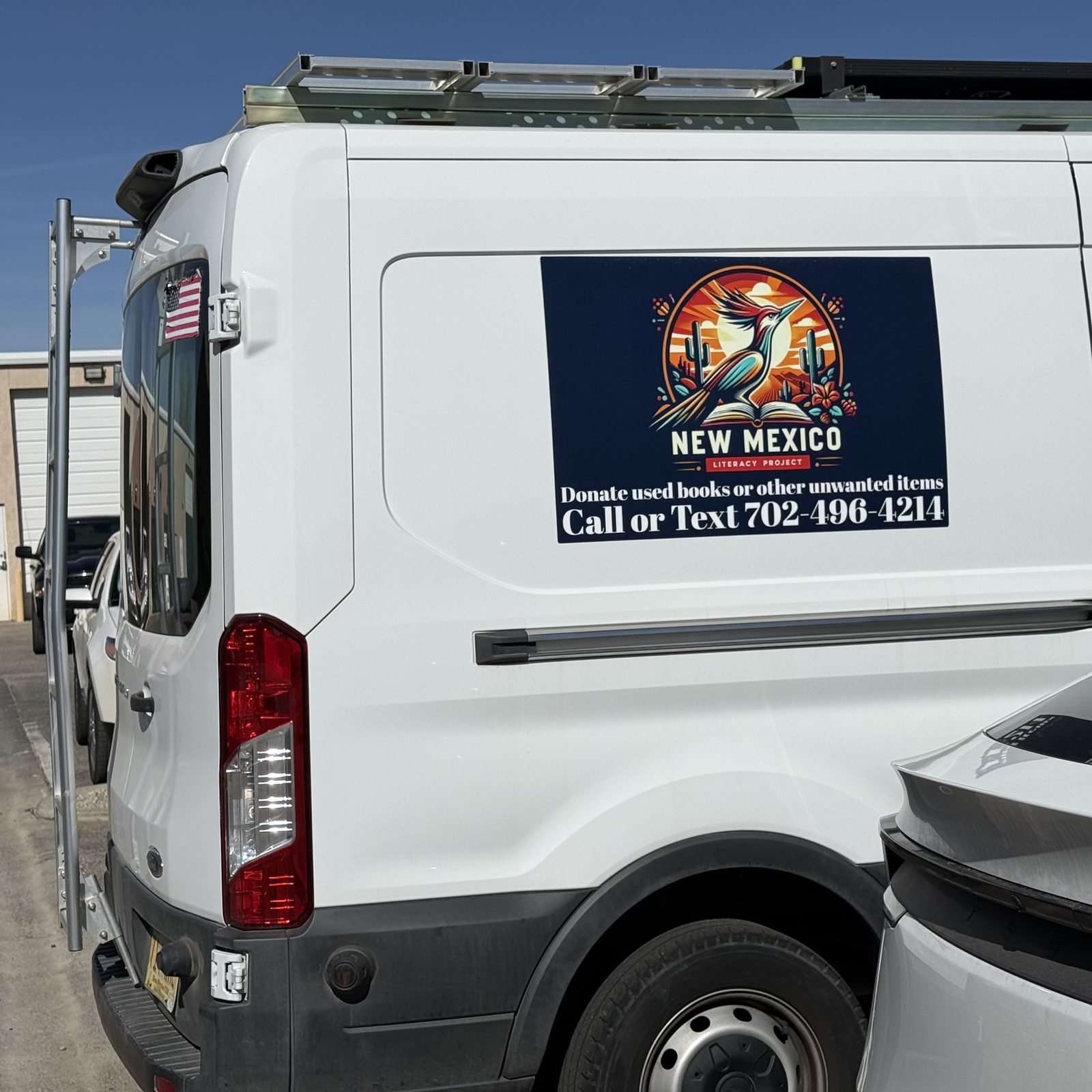
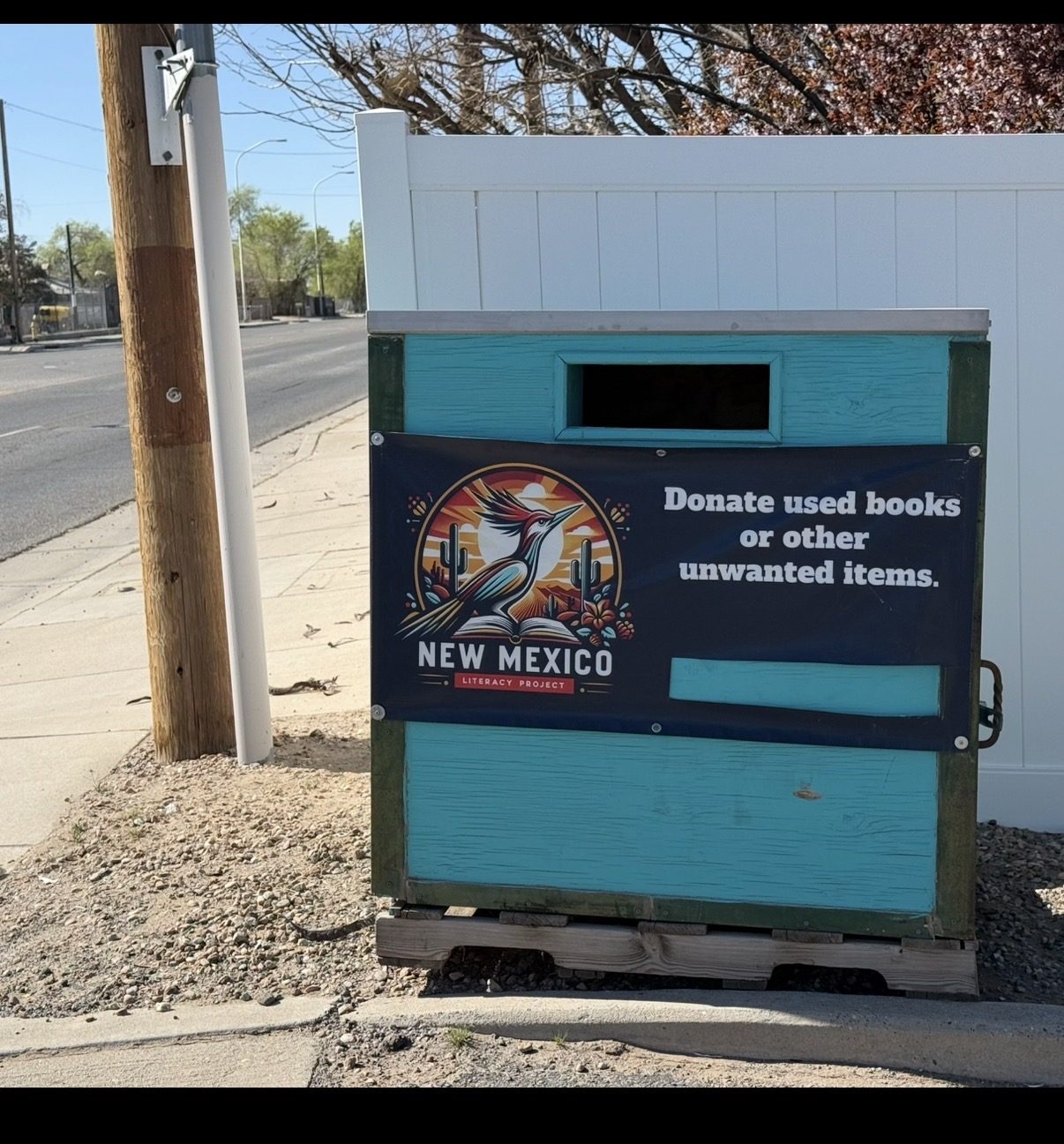
How “nothing to the landfill” actually works.
Most book buyers stop at the bookstore door. Josh handles the other end too — the books that can't be sold and can't be read, run through a hydraulic cutter to separate binding from text block so the paper recycles cleanly.
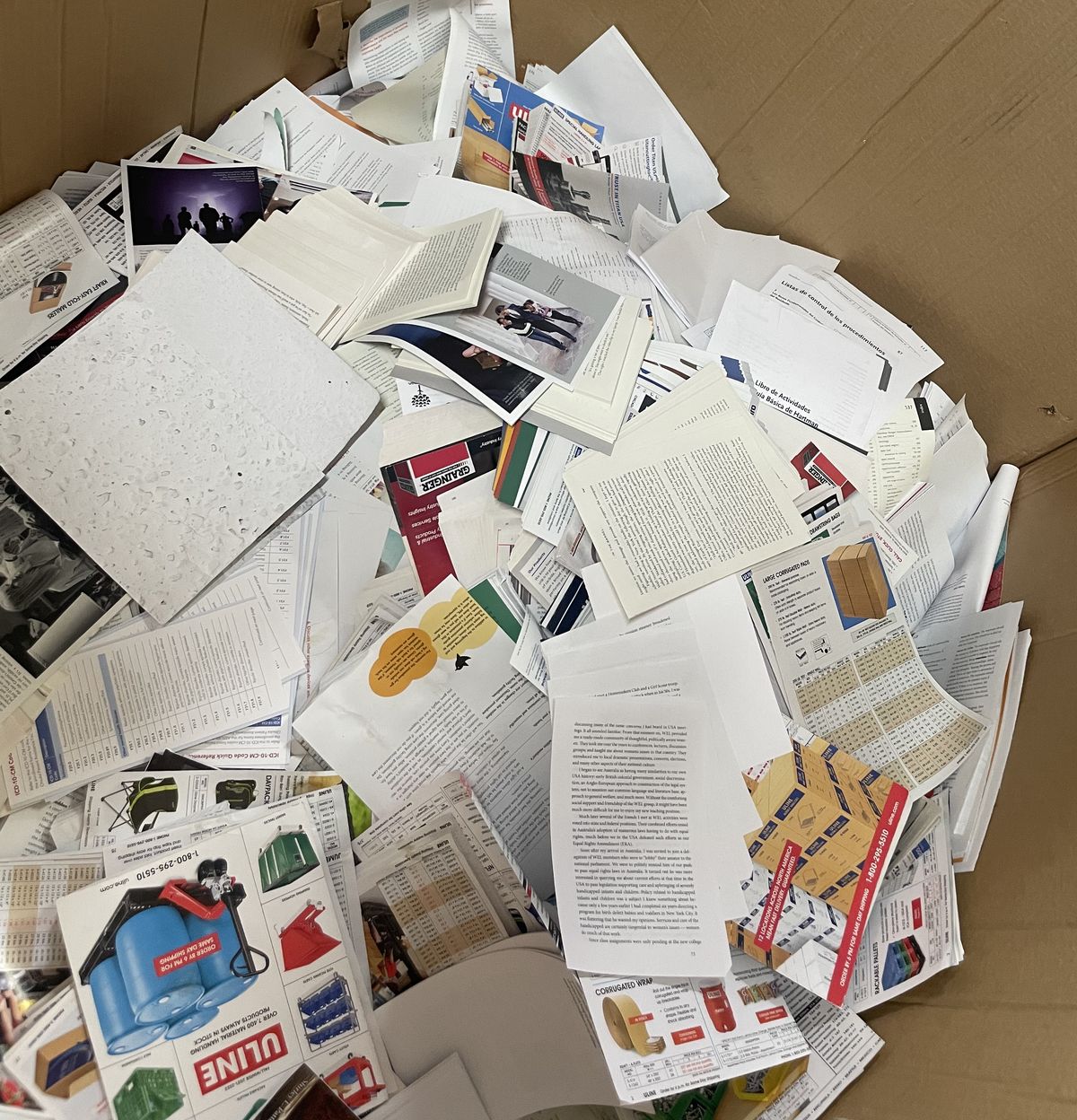
Why it matters: most buyers quietly let the undesirable material get dumped somewhere else — a thrift pile, a curb, a dumpster. “Nothing to the landfill” is only true if someone is actually doing the unglamorous part. This is that part.